Author: mercy15

  • Three Years Later: How Pain Became Purpose

    There was a time in my life when I couldn’t imagine ever saying this—but today, I am deeply thankful.

    Thankful for the car accident that changed everything.

    Thankful for my first marriage, even though it carried so much pain.

    Thankful for the seasons that broke me, because they also rebuilt me.

    As I approach the three-year anniversary of my car accident, I find myself standing in a place I never thought I’d reach: mentally healthy, emotionally grounded, and more at peace than I have ever been in my life.

    This didn’t happen overnight. It wasn’t easy. And it definitely wasn’t something I understood while I was in the middle of it.

    When Life Forces You to Stop

    The car accident didn’t just injure my body—it forced my entire life to pause. Everything I had been running from, pushing down, or surviving through suddenly came to the surface. I couldn’t “stay busy” to avoid my pain anymore. I had to sit with it.

    At the time, it felt unfair. I felt angry, confused, and defeated. I asked why more times than I can count. Why now? Why me? Why so much loss layered on top of more loss?

    But what I didn’t realize then was that the accident was an interruption with intention. It slowed me down enough to finally hear what my soul had been trying to say for years.

    The Anger I Carried

    For a long time, I carried deep anger toward my first husband. That marriage left wounds I didn’t know how to name back then. I held resentment, grief, and disappointment—toward him, toward myself, and toward the version of love I thought I had lost forever.

    I used to think healing meant forgetting or minimizing what happened. Now I know healing means understanding it.

    Today, I can honestly say this: I no longer live in anger. I’ve learned that holding onto resentment only kept me tied to a past version of myself that I had outgrown. Letting go didn’t mean excusing pain—it meant freeing my mind.

    That marriage taught me boundaries. It taught me discernment. It taught me the difference between attachment and love, survival and partnership. And most importantly, it taught me who I am when I choose myself.

    What I Didn’t Understand Then, I Understand Now

    There was a time when none of this made sense. I couldn’t see growth—I could only see loss. I couldn’t see purpose—I could only feel pain.

    But clarity doesn’t come in the storm. It comes after you’ve walked through it.

    Now I understand that both my marriage and my car accident shaped me in ways comfort never could. They stripped me of who I thought I had to be and revealed who I truly am.

    They taught me emotional awareness.

    They taught me resilience.

    They taught me how trauma affects the brain, the body, and the spirit.

    They taught me compassion—for myself and for others.

    Mental Health Is My Greatest Victory

    One of the biggest miracles of my life isn’t something you can see—it’s my mental health.

    I am grounded.

    I am emotionally aware.

    I feel safe in my own mind.

    I feel peace in my body.

    That is something I never take lightly.

    I’ve learned how to process instead of suppress. How to feel without being consumed. How to rest without guilt. How to set boundaries without fear. I’ve learned that healing is not weakness—it’s strength practiced daily.

    I feel better now than I ever did before the pain. And that alone tells me the struggle wasn’t wasted.

    Stepping Into Purpose and Calling

    Today, I know without doubt that I am walking in my purpose.

    Everything I endured prepared me to serve others with empathy, wisdom, and authenticity. I don’t speak from theory—I speak from lived experience. I understand trauma, loss, emotional pain, and mental health because I’ve lived it.

    Mercy15 was born from that understanding.

    It exists because healing deserves a voice.

    Because stories deserve to be honored.

    Because people deserve to know they are not broken.

    I no longer see my past as something that happened to me. I see it as something that happened for me—shaping me into a woman who leads with compassion, strength, and clarity.

    Gratitude for the Journey

    I am grateful for the woman I was, even when she was hurting.

    I am grateful for the lessons I learned the hard way.

    I am grateful for the pause that saved my life.

    I am grateful for the growth that followed the grief.

    Three years later, I can say this with confidence: I wouldn’t erase my story—even the painful chapters—because they led me here.

    To a place of peace.

    To a place of purpose.

    To a place of mental and emotional health I once thought was impossible.

    If You’re Still in the Middle of It

    If you’re reading this and you’re still angry, still confused, still hurting—please know this: understanding comes later. Healing comes in layers. And purpose often reveals itself after the pain.

    Your story doesn’t end where it hurts. Sometimes, that’s exactly where it begins.

    And if my journey has taught me anything, it’s this: what tried to break me may very well be the thing that build the life I’m  meant to live.

    🎶🎵Olivia Dean ~ A Couple Minutes🎶🎵


    Loving Myself Changed Everything

    One of the greatest transformations in my healing journey has been learning how to truly love myself.

    Not the surface-level kind of self-love, but the kind that comes from knowing who I am, honoring my limits, and forgiving myself for what I didn’t know back then. I love the woman I’ve become. I love my growth, my softness, my strength, and even the parts of me that had to learn through pain.

    Self-love gave me clarity. It gave me peace. It allowed me to stop seeking closure from people and start giving it to myself.

    And with that love came something I never expected—freedom.

    Releasing the Past With Grace

    Today, I can genuinely say this: I hope my ex-husband Marq*** is doing well.

    There is no bitterness in that statement. No hidden anger. Just honesty and grace.

    I no longer see him through the lens of hurt, but through the lens of understanding. We were two people doing the best we could with what we knew at the time. What once felt like failure, I now recognize as a lesson that shaped my emotional maturity and helped me understand what I deserve and how I deserve to be treated.

    Wishing him well doesn’t erase what happened—it simply means it no longer has power over me.

    Letting go wasn’t about forgetting the pain. It was about choosing peace over resentment and growth over blame. It was about understanding that not everyone is meant to stay, but everyone leaves something behind that helps shape who we become.

    TRUE HEALING NOT JUST SURVIVAL🧠💚🙏🏽

    Loving Myself Enough to Move Forward

    Loving myself means I no longer carry anger as armor.

    It means I choose healing over holding on.

    It means I honor my past without living in it.

    I’ve learned that forgiveness isn’t about the other person—it’s about freeing your own heart. And in that freedom, I’ve found purpose, clarity, and a deep sense of peace.

     

  • Gratitude & Grounding

    Letting the Body Lead

    Today, we’re not trying to fix anything. We’re not reaching for meaning.

    We’re just letting the body tell the truth. Before gratitude, there is safety.

    Before reflection, there is breath.

    Grounding: One Minute at a Time

    Sit or stand in a way that feels supportive.

    Place one hand on your chest.

    Place the other somewhere that feels comforting—your stomach, arm, or thigh.

    Breathe in slowly.

    Breathe out a little longer than you breathed in.

    Say quietly (or in your mind):

    “I am here.”

    Say it again.

    Body-Based Gratitude

    Instead of thanking life, thank your body.

    Notice:

    • Your feet holding you up
    • Your shoulders releasing even slightly
    • Your lungs doing their job without asking permission

    You don’t have to love your body today. Just acknowledge that it’s trying.

    If it helps, complete this sentence:

    “Thank you, body, for _______ today.”

    Even “keeping me alive” counts.

    A Pause for Presence

    Look around and name:

    • One color you’re drawn to
    • One texture you can feel
    • One sound that feels neutral or calming

    Let your eyes rest there for a few breaths. This moment doesn’t need improvement.

    Reflection (No Pressure)

    • Where did I soften, even a little, today?
    • What felt steady when everything else felt uncertain?
    • What do I want to carry gently into tomorrow?

    A Quiet Prayer (Optional)

    God, help me trust the wisdom You placed in my body.

    Help me listen without judgment.

    Let today be enough.

    Amen.

    Mercy15 Truth

    Gratitude doesn’t have to be joyful to be real.

    Grounding doesn’t have to be calm to be effective.

    Showing up gently is still showing up.

  • The Hidden Work of God

    When prayers feel unanswered.

    When progress feels invisible.

    And in those moments, it’s easy to wonder:

    “God, are You still working?”

    The truth is—God does some of His deepest work behind the scenes.

    Just because you don’t see movement doesn’t mean nothing is happening.

    Just because it’s dark doesn’t mean light isn’t on the way.

    God often works in ways we don’t recognize until later.

    He’s rearranging things we didn’t even know needed to move.

    He’s protecting us from doors we wanted but weren’t ready for.

    He’s strengthening our spirit while we’re focused on surviving the moment.

    Growth doesn’t always feel like growth.

    Sometimes it feels like waiting.

    Sometimes it feels like loss.

    Sometimes it feels like endurance.

    But waiting is not wasted when God is involved.

    When You Can’t Count What God Is Doing

    We live in a world that measures everything—numbers, timelines, milestones.

    But God doesn’t work on our clocks or according to our understanding.

    You may not be able to count what He’s doing,

    but heaven is still moving on your behalf.

    Faith is trusting that God sees what you can’t see

    and knows what you don’t yet understand.

    🙏🏽“For we walk by faith, not by sight.” — 2 Corinthians 5:7

    Keep Going. Don’t Give Up.

    If you’re tired—rest, but don’t quit.

    If you’re confused—pray, but don’t turn back.

    If you feel unseen—remember God never loses sight of His children.

    The breakthrough you’re praying for

    may already be in motion.

    The light you’re waiting to see

    will shine—sometimes suddenly, sometimes slowly,

    but always right on time.

    A Word for the One Reading This

    If you’re still here, still trying, still believing—

    that alone is evidence of God’s grace on your life.

    You are not forgotten.

    You are not behind.

    You are not doing this alone.
    Never give up.

    God is working—even now.

    MERCY15 Reflection🧠

    📝 Where in your life do you need to trust God’s unseen work?

    📝 What would it look like to surrender control and keep walking in faith today?


  • WHY CONNECTION IS ESSENTIAL

    Healing Happens in Community: A Faith & Mental Health Perspective

    Healing is sacred work—and Scripture reminds us that it was never meant to be done alone.

    From the very beginning, God said, “It is not good for man to be alone.” That truth reaches far beyond physical companionship. It speaks to our emotional, mental, and spiritual well-being. Isolation may feel safer when we’re hurting, but healing flourishes in connection.

    God Designed Us for Connection

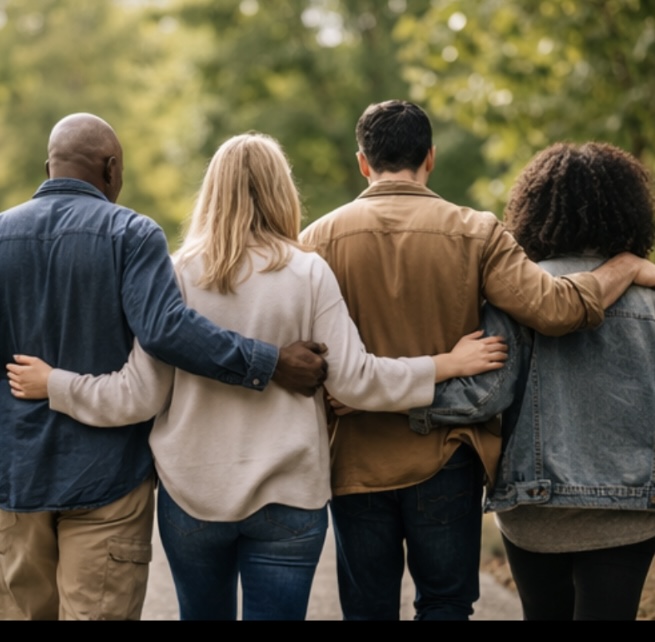
    Faith teaches us that we are members of one body, not independent parts trying to survive on our own. When one part suffers, the whole body feels it. Community is how God carries us when we are too tired, anxious, or overwhelmed to carry ourselves.

    In mental health, we see this clearly: connection regulates emotions, reduces shame, and restores hope. In faith, we understand it as God working through people—using shared burdens, prayer, and presence as instruments of healing.

    Silence Breeds Shame, But Community Brings Light

    Many people struggle in silence because they believe their mental health challenges reflect a lack of faith. But struggling does not mean you are weak—it means you are human.

    Scripture tells us to “carry one another’s burdens.” That is both a spiritual command and a mental health principle. When pain stays hidden, it grows. When it is brought into the light—through safe relationships—it begins to heal.

    Community creates space where we can say:

    • “I’m not okay.”
    • “I’m anxious.”
    • “I’m grieving.”
    • “I’m struggling with my faith.”

    And still be met with grace.

    God Heals Through People

    Prayer is powerful—but so is presence. God often answers prayers through community: through a listening ear, a shared testimony, a therapist, a support group, or a friend who sits with you in the mess without trying to fix you.

    Mental health healing and spiritual growth are not opposites. They are partners. Faith gives meaning and hope; mental health care provides tools and understanding. Together, they support whole-person healing.

    Healing Is Not Linear—and That’s Okay

    Community teaches us patience. Some days we feel strong; other days we feel exhausted. Faith reminds us that God’s grace meets us daily, not just when we feel “healed enough.”

    You are not failing because you need help.

    You are not less faithful because you’re still healing.

    You are not alone because God placed people around you for a reason.

    This Is the Heart of MERCY15

    MERCY15 exists to create safe, faith-rooted spaces where mental health is acknowledged, not ignored—and where healing is approached with compassion, not judgment.

    We believe:

    • God works through community
    • Healing requires honesty
    • Faith and mental health can coexist
    • Mercy is essential to growth

    You don’t have to walk this journey alone.

    Healing is shared.

    Healing is supported.

    Healing happens in community.

  • Trusting God When He Takes You The Long Way

    Reflection on Timing, Detours, and Divine Precision

    There are seasons when God does not take us the shortest route. Instead, He leads us the long way—the road that stretches our faith, humbles our control, and teaches us how to trust. The long way is not punishment; it is protection. It is often God’s mercy at work.

    We may see the hill in front of us, but God sees over the hill. He sees what lies ahead, what must be avoided, and what must be built within us before we arrive. Scripture reminds us that God is both the author and the finisher of our faith. That means He is not only concerned with where we end up, but how we get there.

    “Many are the plans in a person’s heart, but it is the Lord’s purpose that prevails.”

    — Proverbs 19:21

    When Control Masquerades as Faith

    One of the greatest struggles for believers is not belief—it is timing. We believe God can, but we wrestle with when. In moments of waiting, we often attempt to regain control. And when control goes unchecked, it can quietly turn into pride, fear, or even narcissistic tendencies—where we trust our plans more than God’s purpose.

    But God does not submit to our impatience.

    “The lot is cast into the lap, but its every decision is from the Lord.”

    — Proverbs 16:33

    God controls outcomes. No door opens unless He allows it. No door closes unless He protects us. And no situation is too delayed for Him to turn in a single moment.

    Favor Is a Sign, Not a Struggle

    There is a difference between perseverance and forcing. God gives favor where alignment exists. When there is no favor, no peace, and no confirmation—it may be an indication that we are wasting time trying to make something work that God never authorized.

    Favor doesn’t mean ease, but it does mean grace. And when God is in something, even the waiting carries purpose.

    “I planted the seed, Apollos watered it, but God has been making it grow. So neither the one who plants nor the one who waters is anything, but only God, who makes things grow.”

    — 1 Corinthians 3:6–7

    Impatience and Counterfeit Connections

    Many professing disciples struggle with trusting God’s timing. We find ourselves asking, “God, when?” And in that question, impatience can creep in.

    Impatience is dangerous because it opens the door to counterfeits. When we rush ahead of God, we may entertain relationships, opportunities, or connections that look good—but are misaligned. Impatience is the enemy’s pawnshop. He sells knockoffs that resemble God’s promise but come at the cost of your peace, purpose, and destiny.

    Sometimes discernment looks like admitting: I’m in the wrong room. And wisdom is knowing when to make an exit.

    It is better to be single in the will of God, in a cold bed, than kept warm by something—or someone—sent to derail your destiny. Your heart cannot afford that price again.

    God’s Timing Is Precise, Not Late

    God works on an eternal clock, not the clocks of man. His plans do not rush, and they do not delay. They arrive at the appointed time.

    There is a set time before your time. And timing affects impact. If God releases something too early, it could crush you. If He releases it too late, it could miss its purpose. That is why waiting is not wasted—it is preparation.

    Trust the detour if it keeps you in His will. Let God take you the long way if it leads to deliverance. His timing is never accidental—it is intentional, precise, and rooted in love.

    At Mercy15, we believe that faith is not just believing God for the promise—it is trusting Him in the process. And when we surrender our timelines, we make room for His perfect plan to unfold.

  • Faith Is a Daily Walk

    Faith isn’t just something we turn to in difficult seasons—it’s something we live out every day. It shows up in our choices, our thoughts, and how we treat ourselves and others.

    Sometimes faith looks like bold action.

    Sometimes it looks like quiet obedience.

    Sometimes it looks like waiting—even when we want answers now. Trust grows when we learn to surrender the need to have everything figured out.

    Growth Requires Intention

    Growth doesn’t happen by accident. It happens when we pause, reflect, and allow God to shape our character.

    That might look like:

    • Creating space for prayer and reflection
    • Practicing gratitude in small moments
    • Learning when to rest and when to move forward
    • Choosing wisdom over reaction

    Spiritual growth isn’t about perfection—it’s about progress.

    “For we are God’s workmanship, created in Christ Jesus to do good works.”

    — Ephesians 2:10

    Living With Purpose

    A purpose-filled life isn’t about doing more—it’s about living aligned. When faith guides our steps, even the smallest actions can have lasting impact.

    And trust that God is leading you exactly where you need to be.

    Faith Is Trust in Motion

    Faith doesn’t mean we won’t have doubts. It means we choose to believe God is present and working, even when we can’t see immediate results.

    “Now faith is confidence in what we hope for and assurance about what we do not see.”

    — Hebrews 11:1

    Faith moves us forward when logic says wait. It reminds us that God’s timing is intentional and His plans are greater than our understanding.

    Walking by Faith, Not Fear

    Fear often focuses on what could go wrong. Faith focuses on who God is.

    When we walk by faith, we learn to release control and trust God with outcomes. We begin to respond with peace instead of panic, courage instead of hesitation.

    “For we walk by faith, not by sight.”

    — 2 Corinthians 5:7

    Faith teaches us to take the next step—even if we can’t see the whole staircase.

    No matter where you are in your journey, your faith—no matter how small—has power.

    “If you have faith as small as a mustard seed… nothing will be impossible for you.”

    — Matthew 17:20

    Choose faith today.

    Trust God with the unknown.

    And keep moving forward with confidence.

    — Mercy15

  • Progress Over Pressure

    We live in a world that constantly pushes speed, results, and perfection. But real growth doesn’t come from pressure—it comes from progress.

    Progress is choosing to move forward even when the outcome isn’t clear. It’s learning as you go, adjusting when needed, and trusting that consistency will take you further than rushing ever could.

    You Are Not Behind

    Everyone’s journey looks different. Comparing your timeline to someone else’s only steals your focus and drains your motivation. Growth happens on your timeline, at your pace, and in your own way.

    Where you are today is not a failure—it’s a foundation.

    Consistency Builds Confidence

    Confidence doesn’t come from waiting until you feel ready. It comes from showing up repeatedly and proving to yourself that you can follow through.

    Small, consistent actions create momentum:

    • Daily habits
    • Intentional choices
    • Continued effort, even on low-energy days

    Each step counts.

    Rest Is Part of Progress

    Taking a pause doesn’t mean quitting. It means you’re allowing yourself the space to reset and refocus. Rest strengthens clarity, creativity, and direction.

    You don’t lose momentum by resting—you protect it.

    Keep Moving Forward

    Growth doesn’t require you to have all the answers. It only requires willingness. Keep learning. Keep adjusting. Keep believing in what you’re building.

    At Mercy15, we encourage forward movement with purpose and positivity.

    Choose progress. Release pressure. Keep growing.

  • Healing Before Moving Forward: My Story

    There was a time in my life when love felt like safety.

    I was married to a man I loved deeply. I believed in our future. I believed in us. But slowly, the marriage began to unravel in ways I never imagined. Infidelity entered the picture. Distance replaced intimacy. What started as emotional pain turned physical. The person I loved became someone I feared, and the marriage I fought for became the very place that was breaking me.

    Then came the accident.

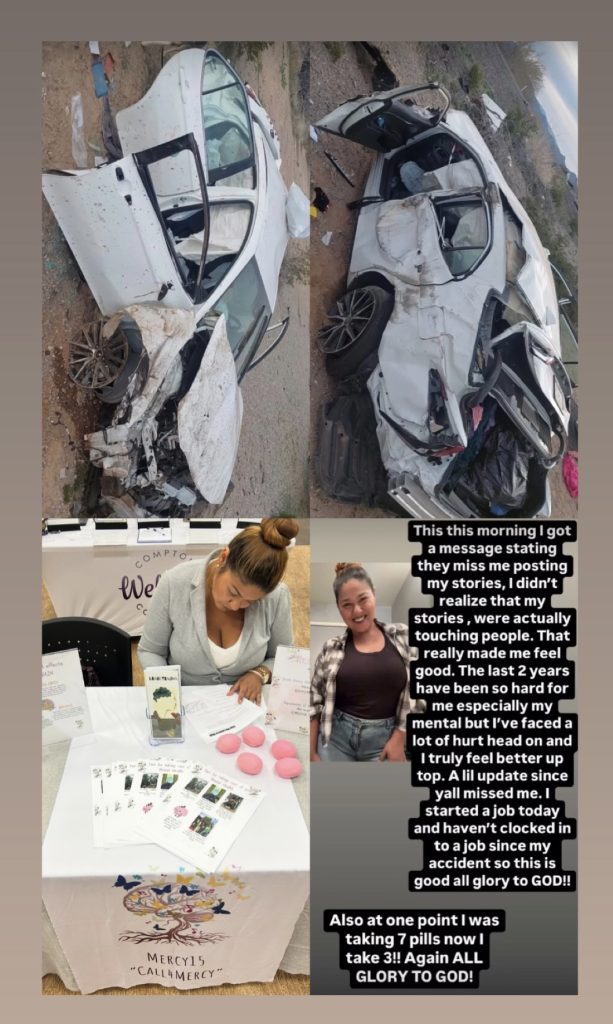
    While traveling from Texas to California, our lives changed in an instant. We were driving at approximately 75 miles per hour when we crashed into a brick wall and flipped multiple times. I don’t remember everything—but I remember waking up to chaos, confusion, and pain. I was airlifted to a hospital in Arizona, fighting injuries I didn’t yet understand.

    I sustained neuropathy in both of my legs and in my right elbow. I lost movement in my right arm. The nerve damaged in my elbow controls the movement in my right hand. I spent a year in physical therapy, relearning movement, rebuilding strength, and learning how to live in a body that no longer felt familiar.

    But the physical injuries were only part of the story.

    After the car accident, I was placed on medication to support my brain. There were seasons when my thoughts felt foggy, my emotions unpredictable, and my confidence shaken. I truly believed I might never be able to work again. I questioned my purpose. I questioned my future. I questioned whether the version of me before the accident was gone forever.

    In February 2025, I stopped taking that medication, and over time, my mind began to feel clearer. Still, healing was not instant. I continued discovering the long-term effects of my injuries. I experienced amnesia—walking toward the wrong car, forgetting where I was, or losing track of time. Some days, I didn’t trust my own memory.

    Yet even in that uncertainty, God was working.

    What I could not see, God was restoring. What felt broken, He was rebuilding. What I thought was the end was only a pause.

    And then, in March 2025, I was cleared to return to work.

    What once felt impossible became evidence of God’s grace. The same mind I feared was failing was being renewed. The same future I thought was closed was opening again—step by step, breath by breath. God did not rush my healing, but He was faithful in it.

    All of this was happening while I was still navigating emotional recovery.

    Six months after divorcing my first husband, I remarried. And the truth is—I wasn’t ready. If I would’ve healed from my first marriage, I would’ve never got married a second time around. That marriage should had never happened. What I will say is that my second marriage showed me how to create boundaries for myself.  

    I had not fully grieved. I had not fully healed. I carried trauma from betrayal, and a life-altering accident into a new relationship without giving myself the space to recover. I hoped love would fix what only healing could.

    And this is why healing matters.

    Healing is not about time passing—it’s about intentional restoration. It’s about allowing your mind, body, and spirit to catch up to what your heart has endured. When we don’t heal, we bring wounds into new spaces and expect new people to carry old pain.

    At Mercy15, I share my story not for sympathy—but to show that God still works in the middle of trauma. He still restores purpose. He still opens doors we thought were permanently shut.

    If you are reading this and wondering if your life is over because of what you’ve been through, I want you to know this:

    God is not finished with you. Healing is possible. And your future still holds purpose.

    Your healing matters.

    Your story matters.

    And God’s timing is perfect. I thank the Lord for all the lows! I want you guys to know that I praised him through all the pain and heartache! Look how faithful he is!

    — Mercy15

  • Healing out Loud

    Healing Out Loud: Choosing Courage Over Silence

    For so long, many of us were taught to stay quiet about our pain. We learned to smile through heartbreak, minimize our struggles, and carry wounds in silence. But silence often deepens pain, while healing begins when we allow ourselves to be seen. Healing out loud is the brave decision to stop suffering alone.

    Healing out loud does not mean oversharing or exposing yourself to harm. It means speaking truth in safe spaces, acknowledging your pain, and allowing God and others to meet you there.

    Silence Feeds Shame

    Shame thrives in isolation. When pain goes unspoken, it convinces us that we are weak, broken, or alone. But the truth is, many people are carrying the same hidden struggles—grief, trauma, anxiety, depression, and loss—while believing they are the only ones.

    Healing out loud breaks the lie that we are alone in our suffering.

    Your Voice Creates Space for Others

    When one person chooses to speak honestly, it creates courage in others. Your story may be the confirmation someone else needs to seek help, ask for prayer, or believe that healing is possible. Speaking out loud turns pain into purpose and isolation into community.

    “They overcame by the blood of the Lamb and by the word of their testimony.” — Revelation 12:11

    God Is Present in the Process

    Healing out loud is an act of faith. It says, “God, I trust You with my story.” Even when healing feels incomplete, God is still working. He uses conversations, community, prayer, and time to restore what was wounded.

    Healing does not mean forgetting what happened; it means no longer being controlled by it.

    You Are Not Weak for Needing Support

    Needing support does not make you weak—it makes you human. God designed us to heal in relationship, not isolation. When we carry one another’s burdens, healing becomes shared and hope becomes visible.

    “Carry each other’s burdens, and in this way you will fulfill the law of Christ.” — Galatians 6:2

    If you are in a season of pain, know this: you are not behind, broken, or forgotten. Healing out loud begins with one small step—speaking honestly, asking for help, or allowing yourself to be vulnerable with God.

    You do not have to heal alone. And you do not have to heal in silence.